


The sustainability of Aotearoa/NZ’s fish stocks is material to the sustainability of our business.
The marine environment around Aotearoa/NZ is separated in the Coastal Marine area (12 nautical miles from shore) and the New Zealand Exclusive Economic Zone (EEZ). The EEZ is a vast area, many times the size of our land. Much of the Coastal Marine area is protected and 34% of the EEZ is protected from certain activities like bottom-trawling and dredging. For more information see:
Our maritime zones and boundaries | New Zealand Ministry of Foreign Affairs and Trade
Sanford is a major quota holder under the Quota Management System (QMS) which was introduced in 1986. The Fisheries Act 1996 further established a uniquely Aotearoa/NZ approach to sustainable management of fisheries. A cornerstone of this legislation is partnership between Crown and iwi-Māori on the use of fisheries resources. The perpetual nature of fisheries stocks under the QMS underpins the financial value of our shareholders’ stock because our quota (our right to fish) is an asset on our balance sheet. For more information about the regulatory system see:
The QMS – why it supports sustainability and biodiversity
The Territorial Sea and EEZ of Aotearoa/NZ is divided into 10 Fisheries Management Areas (FMAs.) Species inhabiting each FMA are designated as a specific fish stock.
For example, snapper is coded SNA and snapper stock in FMA1 is SNA1.
All the main fisheries are allocated this way and carry Individual Transferable Quota (ITQ). There are 642 separate fish stocks covering 98 species in the 10 FMAs.
The Total Allowable Catch (TAC) for each stock is set each year by Fisheries New Zealand. The Total Allowable Commercial Catch (TACC) is a subset of the TAC. The TAC also allocates shares of fisheries resources to recreational and customary uses, as well other losses (e.g. animal predators). The TAC is calculated to ensure maintenance of the remaining biomass in the water so the population can continue to regenerate.
The proportion of TAC which is allocated as TACC is dependent on the other demands of the fishery. For example, SNA1 TACC is around 56% of TAC while HOK1 (hoki) TACC is approximately 99% of TAC.
Quota conveys the perpetual right to commercially fish the fish stock to which it relates. Each year, Sanford is entitled to catch an amount of the TACC in proportion to its quota for the stock. This amount is known as the Annual Catch Entitlement (ACE), associated with the quota.
Quota (%) x TACC (GWT) = ACE (GWT)
(GWT stands for greenweight – the weight of the captured fish – and is measured in tonnes)
We own quota for over 300 individual fish stocks and in FY25 this allocated us more than 75,000 GWT of ACE.
The penalties for catching more of a stock than the ACE held are high and we record every catch event, monitor this against our remaining ACE and report on this monthly to MPI via the information management system – Fishserve. Of the 98 species covered by the QMS, only a small proportion have high commercial value. Fish may be of low commercial value either because they don’t have high market value (due to customer preference) or because the cost of fishing them is high comparative to their sales price.
One of the key differences between commercial fishing in Aotearoa/NZ compared to much of the rest of the world is that we must retain the low-value species we catch. Non-target species are referred to as fish by-catch and we generally do not discard them at sea if they are covered by the QMS. Therefore, our catches are somewhat representative of the localised fish population and not as distortionary to biodiversity as selective catching.
Status of New Zealand’s Fisheries
Environment Aotearoa 2015, a comprehensive, independent and nationwide set of statistics released by the Ministry for the Environment and Statistics New Zealand, notes that commercial fisheries are sustainably managed and overfishing is decreasing.
Between 2009 and 2014, the proportion of fish stocks subject to overfishing decreased from 25 percent to 14 percent. In 2014, more than 95 percent of fish caught were from stocks that are not overfished.
Collaboration and Transparency
Sanford is privileged to operate in New Zealand’s abundant ocean environment where we share the fishery resource with a wide range of stakeholders, including recreational fishers.
In recent years, commercial snapper catches have increasingly come under public scrutiny, often in regard to accusations of overfishing. While Sanford vessels are rarely explicitly targeted, the fact that we have a significant snapper quota holding means we are implicated by default.
To reassure the public that we are operating transparently, our vessels and catches are increasingly monitored including electronically, by independent observers, and by our crews who record every undersized fish caught. This level of detail and scrutiny has never been attempted before. It means we now know the facts and can dispel some myths about the number of undersized snapper being caught.
This sort of transparency is needed through the industry as a whole and Sanford has taken a lead role in supporting the commercial sector to be more innovative and responsive to public concerns through greater transparency.
Electronic Monitoring
One way this is happening is via electronic monitoring.
From 1 October 2015, every commercial fishing vessel catching more than five tonnes of snapper in the FMA1 will have an electronic vessel monitoring system (VMS) on board. This tracks the vessel’s movements continuously, irrespective of whether the vessel is actively fishing or tied up against the wharf. In total, about 70 vessels will have installed an integrated VMS, designed by Trident Systems, SnapIT and commercial fishers, and approved by the Ministry of Primary Industries (MPI).
Trident Systems
Sanford owns 42% of Trident Systems. In addition to the development of electronic monitoring, Trident provides a catch sampling service and is often contracted by MPI and National Institute Water Atmospheric Research Limited (NIWA) to co-ordinate industry sampling.
Precision Seafood Harvesting (PSH)
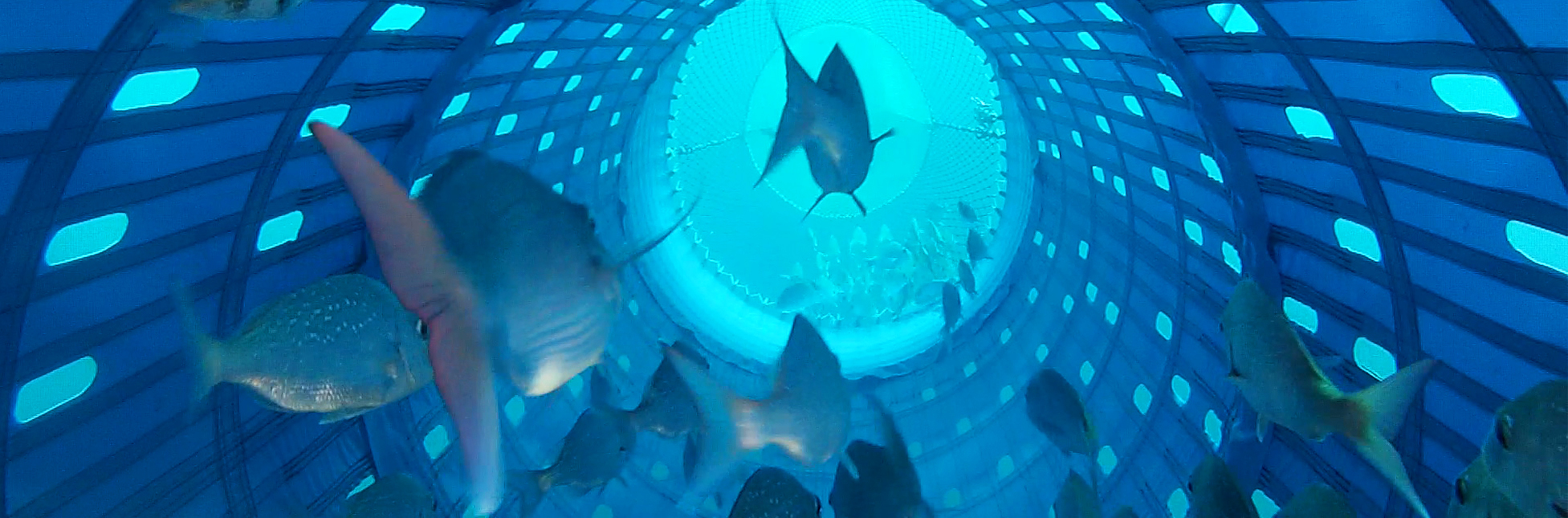
Sanford is a significant investor and shareholder in Precision Seafood Harvesting (PSH), an innovative programme that involves the use of new harvesting technology to result in more precise catches, less by-catch, lower mortality rates, more selectivity and better quality landed fish.
This radical new technique does away with traditional trawl nets. Instead, fish are contained and swim comfortably underwater inside a large flexible PVC liner, where the size and species can be pre-selected before being brought on-board the fishing vessel for processing.
The design of the harvesting system allows fishing vessels to target specific species and fish size, and greatly increases protection for small fish that can swim free through ‘escape portals’ and non-target fish (by-catch), which are released unharmed.
Fish are brought on deck still swimming inside the liner, in perfect condition, meaning fresher, more sustainable fish for consumers and higher value products for fishing companies using the technology.
Approximately 50 tonnes of snapper was landed when trialling the PSH harvest system and the data shows improved potential for survivability in juvenile snapper when harvested using the new technology.
Our Sustainable Marine Farms
Sanford’s 223 aquaculture farms across New Zealand all make positive contributions to their local communities, (for example accounting for jobs in Stewart Island and Bluff). We farm to internationally-recognised best practice and our staff work hard to protect and maintain the marine environments that we operate in.
New Zealand Salmon: The Frontrunner in Worldwide Sustainability
New Zealand’s King Salmon has been named as the world’s most environmentally sustainable farmed salmon by Monterey Bay Aquarium’s Seafood Watch® programme, an influential and respected global authority on sustainable seafood.
Receiving this rating has resulted in overwhelming, immediate recognition for New Zealand King Salmon, with fantastic flow-on effects for local producers.
At Sanford we take many steps to ensure our King Salmon marine farms are environmentally sustainable including:
- Regularly moving farms to limit their environmental impact
- Controlling feed through underwater camera monitoring to prevent feed loss
- Working together with feed suppliers to manage protein levels whilst ensuring the highest quality returns
SPATnz: Secure Supply of High-Performing Mussels
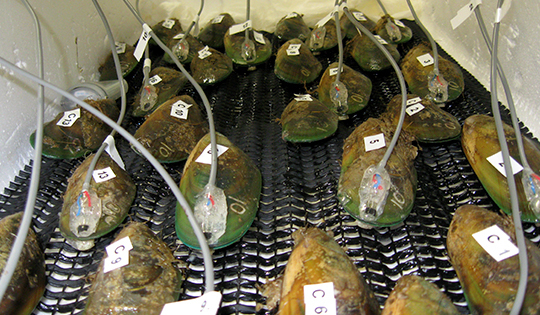
Greenshell Mussels are unique to New Zealand waters and one of our most iconic seafoods. Traditionally, industry has relied on wild-caught spat (baby mussels), which has led to inconsistency in supply and variable mussel performance during farming.
SPATnz aims to change this. SPATnz is a Primary Growth Partnership Programme jointly funded by the Ministry for Primary Industries (MPI) and Sanford. This is part of a seven year project and we are pleased to report that a state-of-the-art pilot scale mussel hatchery was opened in April 2015 and has begun to produce spat.
Through a selective breeding programme SPATnz will help provide certainty of spat supply while continually improving the quality of the crop. This work is conducted in conjunction with scientists from the Cawthron Institute.
Marine Stewardship Council (MSC)
MSC is an organisation dedicated to safeguarding seafood supplies both now and for future generations. Their many initiatives provide consumers with the reassurance that they are buying seafood caught in a sustainable manner. MSC’s main programme is fishery certification, which is then linked to MSC’s Chain of Custody certification. This is important as it helps to keep illegally fished seafood out of the supply chain by linking seafood sold in shops and restaurants to a certified sustainable fishery.
Sanford is committed to conforming to MSC Chain of Custody requirements and has implemented a MSC Management System to ensure that the Chain of Custody is maintained throughout the group.